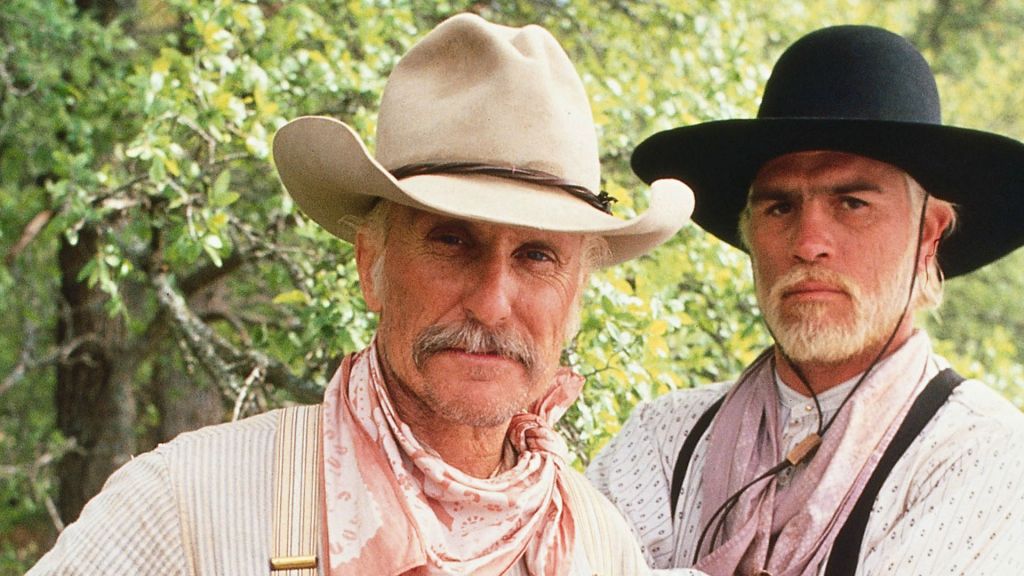
Larry McMurtry set out to demythologize the West and ended up making the most beloved Western story of all time.
More literary than Louis L’Amour, not as bleak as Cormac McCarthy, but not as warm as Elmer Kelton, McMurtry’s Lonesome Dove is a dang masterpiece. He won a Spur Award from the Western Writers of America for it. And a Pulitzer.
And for all that, it’s hard to explain why it’s such a masterpiece. L’Amour’s Sackett legendarium, McCarthy’s border trilogy, and Kelton’s The Time It Never Rained do their fair share of pushing the western genre across the frontier borderlands where genre fiction and literature sometimes coexist. Yet, it’s Lonesome Dove that does so by capturing the same sense of epic proportions that Homer did with The Odyssey. I reckon if Homer wrote The Odyssey today, it would be about Texas Rangers Augustus McCrae and Woodrow F. Call driving cattle from the Rio Grande in Texas to the Milk River in Montana.
I first read it in college, and that desire for epic adventure nearly ruined my life. I wasn’t very well-adjusted to begin with and was having some angst over something or other, and thought I might escape by jumping in my truck and driving west until I couldn’t go any further. I only made it to the Sonic on Highway 6 before reason came back to me. I bought a cherry limeade and some cheese tots, turned around, and went to class.
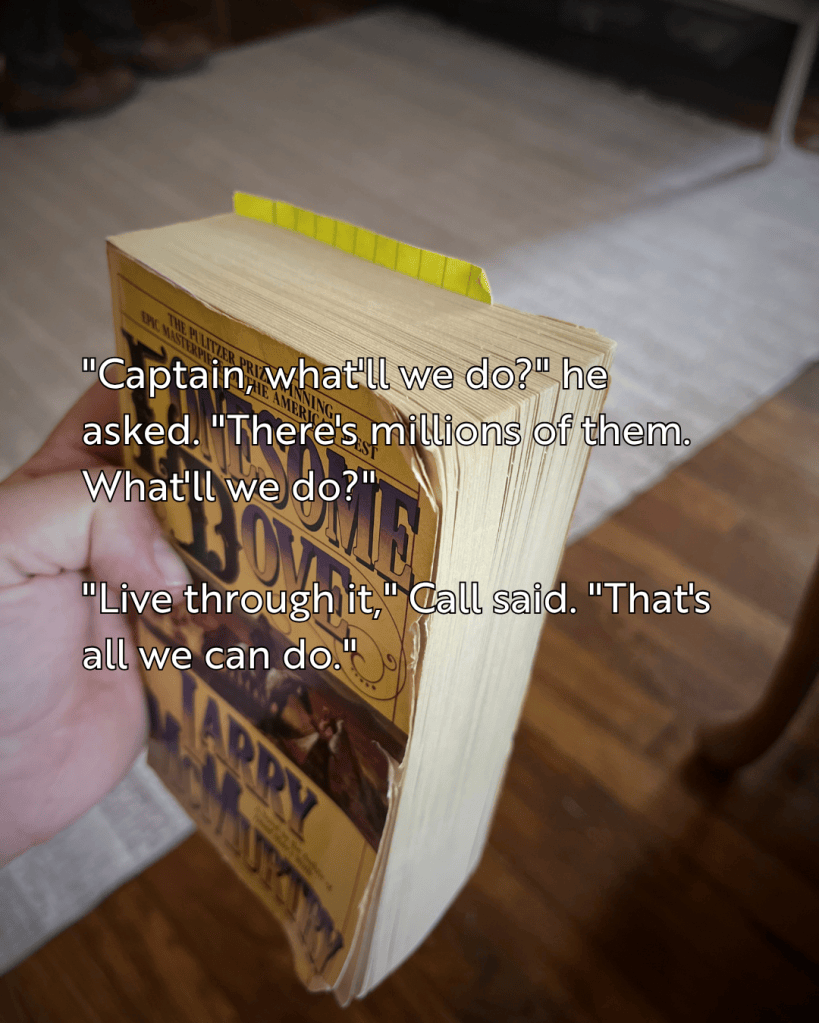
Some might say that was a missed opportunity. Maybe so, but I think I probably just missed becoming a prairie fire rather than something harnessed and productive. Mustangs need to be broken before they can be ridden. I suppose I did too. Reading it 20 years later reminds me why young men need weight on their trailer in order to drive straight.
The strength of the story might be partially due to the excellent adaptation made for the small screen. The 1989 TV miniseries with Tommy Lee Jones and the late Robert Duvall is one of the most faithful book adaptations I’ve ever seen. I know many a man where it’s a house rule that if it’s on the TV, that’s what you’re watching. There are no other channels.
When I got married, I made a deal with my wife that I would watch the 6-hour 1995 Pride and Prejudice miniseries if she watched the 6-hour Lonesome Dove miniseries.
The deal backfired. I can’t prove it, but I think she cheated somehow: She’s only seen Lonesome Dove once, whereas I watch Pride and Prejudice with her all the time. I ain’t ashamed either; Jane Austen is fantastic, and she would have loved Clara Allen’s jugular-slicing personality.
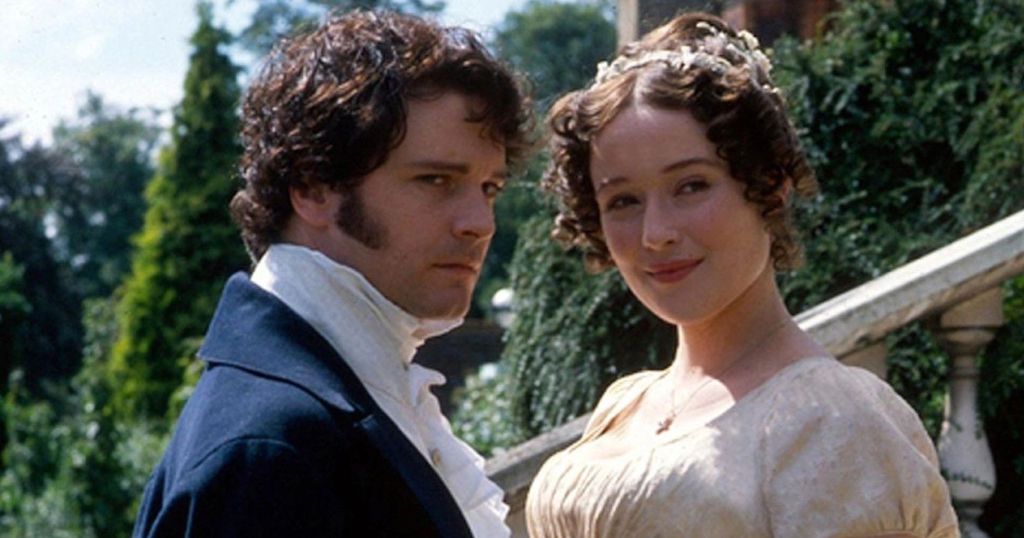
Image liberated from the interwebs.
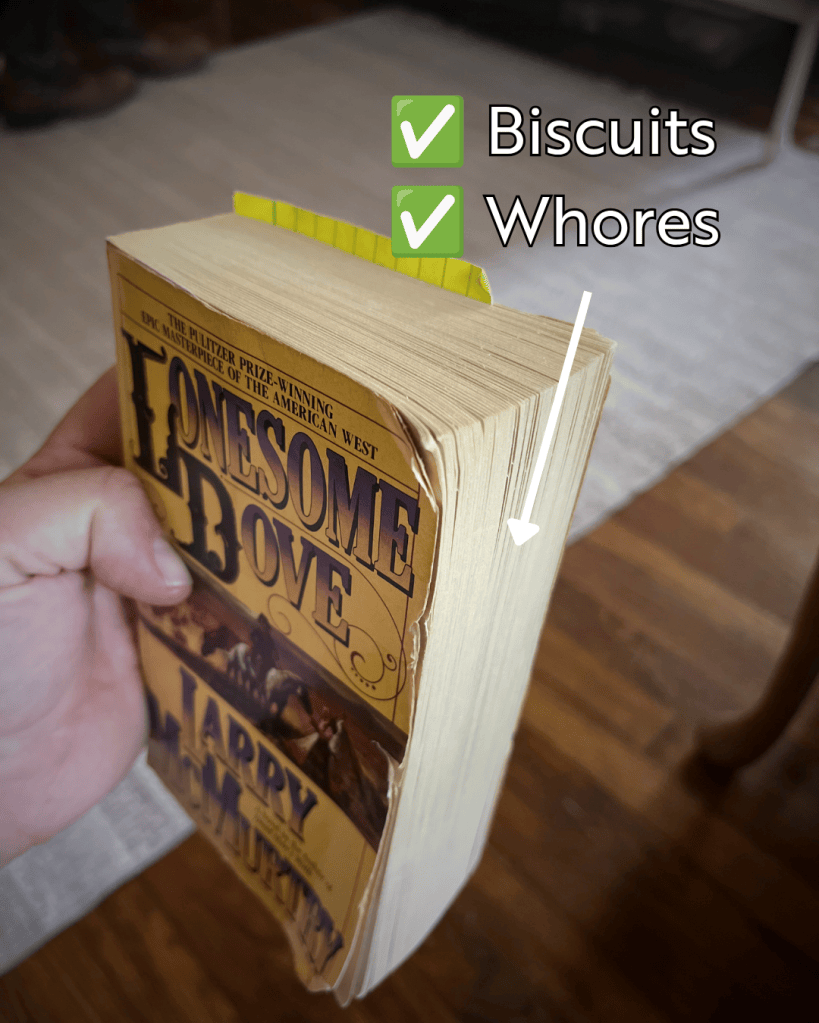
I’ve read it several times since, to the point where the paperback might need replacing soon from wear and tear. This was my first re-read while having a child and since losing my birth father. Newt’s father-hunger and Call’s failures hit harder than they have before. It hurt so bad I could hardly stand it. Just wanted to squeeze my sons.
It’s hard to pick out a favorite scene or quote. Maybe I’ll write a follow-up on “the wisdom of Lonesome Dove.”
What’s your favorite quote? Drop it in the comments like it’s Gus dropping comancheros on the Llano Estacado.


Leave a comment